
Sådan bærer du ure til mænd med stil
Få mere ud af dit ur ved at lære, hvordan du bærer det på den rigtige måde. Fra formelle outfits til de mere casual: Den her omfattende guide beskriver hvilke slags ure, der ser bedst ud for en øjeblikkelig stilopgradering.
Viser Faber Fraser Aviator Ur
You know how a belt should match your shoes? It’s sort of the same deal with watches.
Obviously, the rules apply mostly to formal events. Technically, you’re free to wear a watch with any clothes (footwear included) as you please. But for those who appreciate good etiquette and style, matching your watch to your outfit can sort the men from the boys.
Remember – a watch is an accessory. It should enhance your look, not dominate it.
Viser Sonderborg Lane Ur
Sådan matcher du et ur til dit outfit
Matching your watch to your outfit needn’t be complicated – it’s a matter of thinking like-for-like.
Match up your metals – silver with silver, gold with gold. Take note of the metal elements of your outfit – buckles on your belt and shoes, your rings, cufflinks – and match them with your watch.
The watchband is also important. Like belts and shoes, leather watch bands should match other leathers in your attire. A brown leather watchband is worn with brown leather shoes and belt. A black band means a black belt and shoes.
The same applies to the style of the shoes. Dress shoes work best with a dress watch, while trainers look good with a sports watch.
Light-coloured faces are often reserved for day wear, while grey, khaki, black or brown faces are well-suited for evening attire.
Viser Cruiser Alton Ur
På hvilket håndled bør en mand have sit ur?
Some sources say that a man should wear his watch on his less dominant hand.
If you’re right-handed, wear your watch on the left hand, and vice versa. The logic here is that the watch will not be moved around as much, which may maximise its lifespan. It also means you’ll still be able to check the time while using your dominant hand for other activities… like scrolling through this article.
Traditionally, a watch should be worn loosely enough to allow full use of your wrist. The face should sit next to your ulna (the bone on the outside of the wrist). Your watch shouldn’t poke out from beneath your shirt cuff when you’re standing comfortably. It should only appear when your arm is bent.
The one oh-no-he-didn’t is wearing your watch over your shirt cuff. Just. Don’t.
Viser Adventurer Alton Ur
Forskellige typer ure
Formelle ure / Luksusure
Militærure
Sportsure / Dykkerure
James Bond made these guys famous. The modern diving watch was designed to provide scuba-divers with an accurate timekeeper of their remaining air supply. Most dive watches are water-resistant up to at least 100 metres.
A sports watch, designed for swimming rather than diving, may be waterproof but to shallower depths.
Dive watches are medium-sized, bold-faced and generally made of corrosion-resistant metals such as stainless steel. They’re smart and versatile enough to be dressed up or down.
The chronograph watch (technically a sports watch) was invented when King Louis XVIII of France wanted an accurate timekeeper for his horse races. Today, the modern sports watch is a must-have accessory for sailors, runners, hikers, mountaineers, cyclists and the guy wanting to make every second of his day worthwhile.
Like the diving watch, the sports watch is best suited to physical activity and can feature complications such as heart rate monitors, altimeters, barometers, compasses and GPS tracking.
When To Wear a Sports Watch or Dive Watch
Many sports watches are elegant enough to extend to ‘smart-casual’ or even a fashionable accessory and are perfectly acceptable for everything from office wear to dining out, shopping and travel.
According to tradition, dive watches and suits are a no-go zone. The sheer bulkiness of a dive watch simply doesn’t work with the smooth lines of a suit. Unless you are 007 and just swam up to a casino in Macau – then you can do whatever you want.

Scout | Sort Nato Militær Ur
1199,00 kr

Scout | Grøn Nato Militær Ur
1199,00 kr

Kronos | Sort Outdoor Ur Med Sort Nylon Rem
749,00 kr
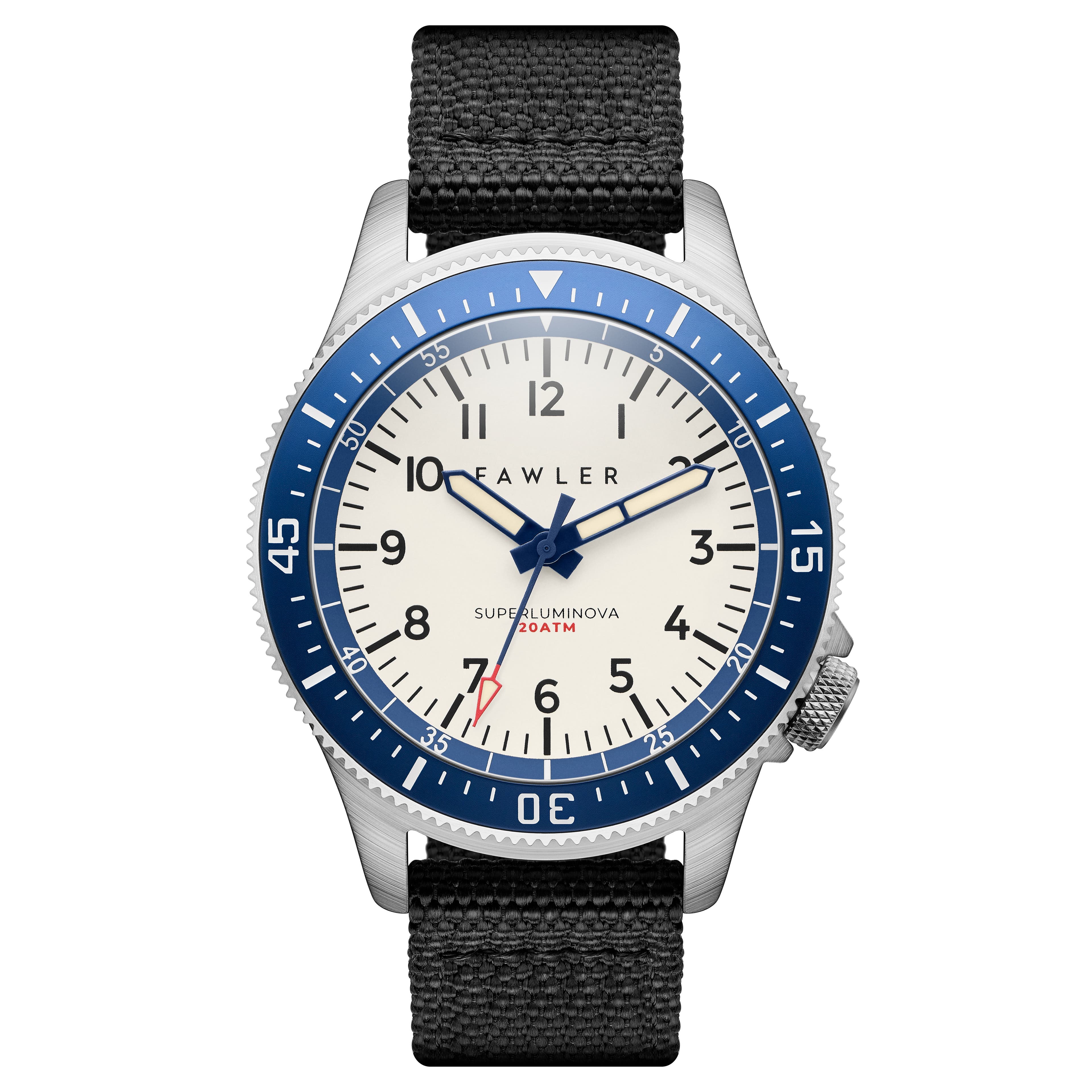
Luscent | Sølvfarvet & Blåt Dykkerur Med Selvlysende Urskive
1499,00 kr

Luscent | Sort Børstet Dykkerur Med Selvlysende Urskive
1499,00 kr
Aviator ure / Piloture
The timekeepers for Royal Air Force pilots, aviator watches are similar to military watches. They’re typically medium-to-large in size and feature an oversized dial with bold numerals for easy reading in adverse conditions. You’ll find the iconic triangle and two dots at 12 o’clock on most aviator watches. This glow-in-the-dark feature allows pilots to quickly find the 12 and tell the time.
Some models feature a rotating bezel with 60-minute increments and a large date complication. The chronographs on aviator watches typically include configuration for 30-minute, 12-hour, and 60-second intervals to allow for easy timing.
When To Wear an Aviator Watch
This is a great all-purpose watch. Although originally designed to be used in action, it’ll pass for city wear, travel or casual hangouts. And if it’s a particularly sleek design, you can wear it with formal attire.
Digitalure
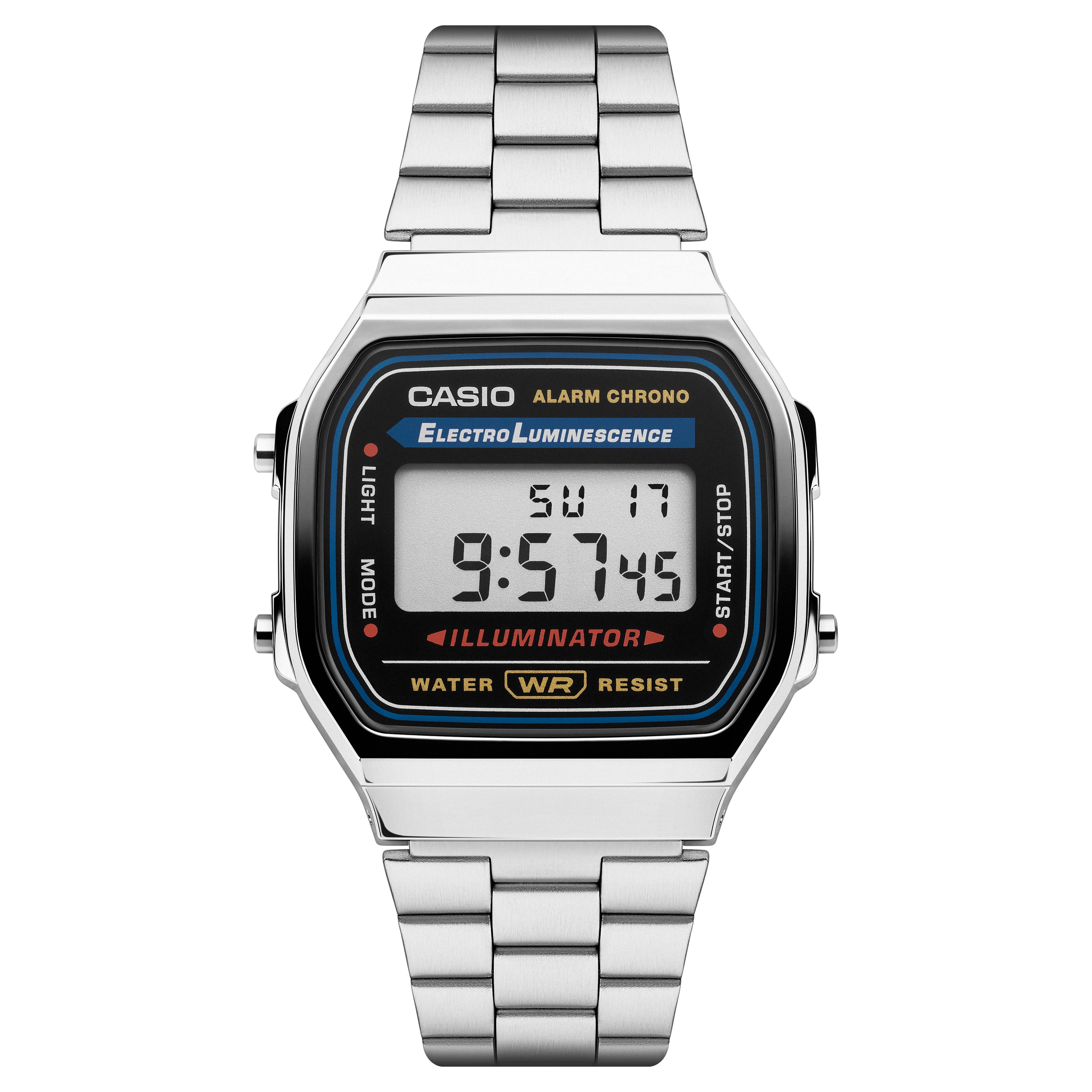
Where an analogue watch shows the time with hands, a digital watch has an LED screen that shows time in numerals. Most digital watches feature a seven-segment display and an all-terrain plastic or rubber band.
Although anything digital would seem like a relatively modern invention, digital mechanical wristwatches have been around since the 1920s.
The first LED watch, however, didn’t make an appearance until 1970. The first digital watch was inspired by the 1968 science fiction film ‘2001: A Space Odyssey’. Digital LED remained quite pricey until 1975 when a company in Texas began mass-producing plastic LED watches.
When to Wear a Digital Watch
According to style gurus, a digital watch is strictly casual-only. That means casual wear, working out, or chilling in a t-shirt and sneakers.


Party Chatter: Historien bag ure til mænd
Although wristwatches have been around since the 18th century, they were originally considered a feminine accessory and worn almost solely by women.
Men didn’t miss out as pocket watches were all the rage. These handsome little timekeepers were (as the name suggests) carried in the pocket, and secured to the waistcoat, lapel, or belt loop with a chain or leather strap.
The shift from pocket watch to men’s wristwatch began when a London company created the first ‘watch wristlet’ design in 1893, but the trend didn’t kick off until the early 20th century. The advent of war was a good enough reason to wear a timekeeper on one’s wrist. War is no place to be groping about in your pocket to check the hour. Soldiers needed to synchronise their movements in battle.
Enter the wristwatch. Functional, fashionable and full of potential.
As per their military application, the first wristwatches for men were known as a ‘trench watch’. They featured the classic round shape of pocket watches with a hinged back and front cover. However, they were able to be worn on the wrist with a thick wire attachment.
Considering the speed at which technology develops today, men’s wristwatches have made rather slow progress. Mechanical watches were the only choice until 1923 when John Harwood invented the first self-winding watch. It wasn’t until the 1950s that electronic watches were created, followed by the quartz watch in the 1970s.
Style, of course, is much more dynamic. The classic leather-and-metal men’s watch may reign, but there’s an enormous variety of shapes, colours, materials and whatever else you fancy available... like this super trendy watch in the video below. You'll never look at the time the same way again.
Viser Sage Ambitio Ur
I Spurgte – Vi Svarede
Kan remmen på et ur være udskifteligt?
Some modern watches have been designed with the option of changing the strap. Great if you like having a lot of variety in your day-to-day wear, or if you can’t bear the thought of not matching your watch strap to your other colours.
Check for straps with quick-release or quick-change pins. These pop in and out with ease and give you styling options.


